No Pot of Boiling Water
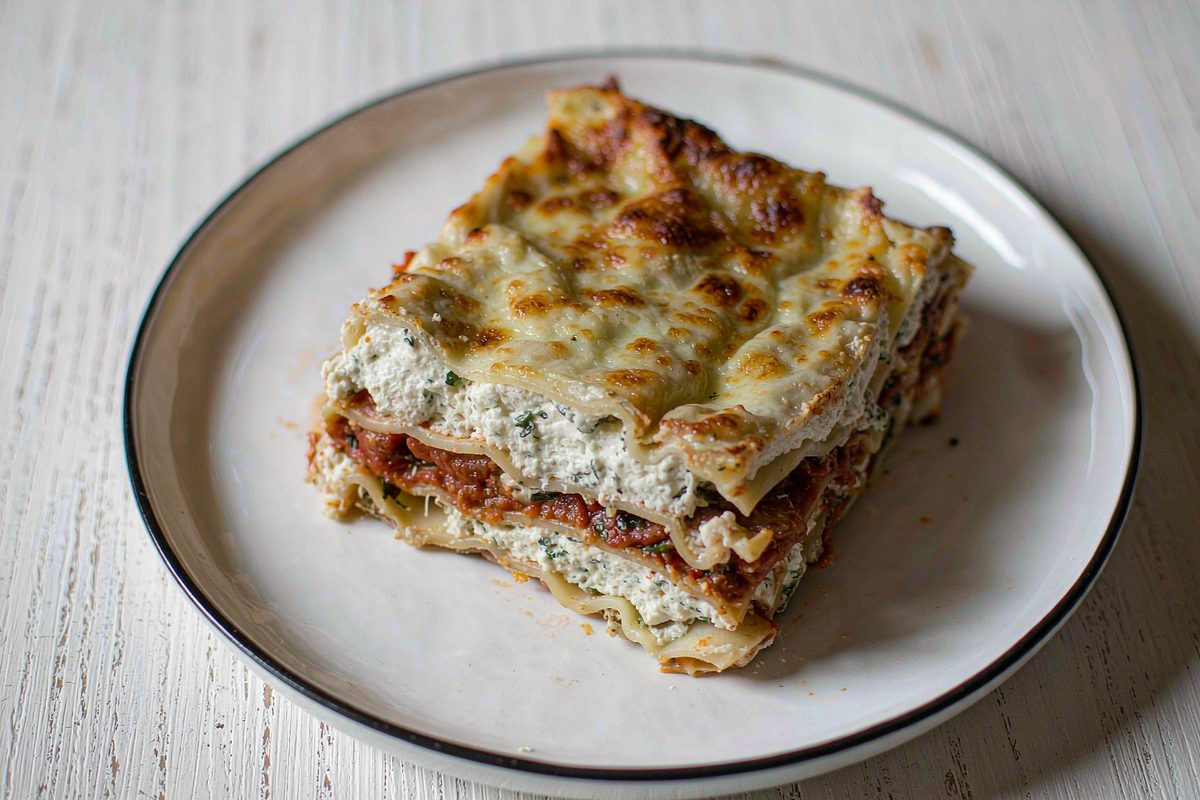
Eight servings from one 9 by 13 dish, and there is no pot of boiling water anywhere in the process. Roasting the vegetables first takes away about a third of their water, and that is what stops the finished lasagna from turning into soup.
Vegetable lasagna has a structural problem that meat lasagna does not. Zucchini and eggplant are around 90 percent water, and that water has to go somewhere during baking. Skip the roasting step and it goes into your sauce, pooling at the corners of the pan.
Roast the Water Out Before Layering
Spread sliced zucchini, eggplant, and peppers on sheet pans, salt them, and roast at 425 degrees F for 20 minutes. They will shrink noticeably and the edges will brown. You are not cooking them through, just driving off enough moisture that they can sit in a lasagna without flooding it.
This is worth contrasting with the shortcut of using raw vegetables and hoping for the best. Raw zucchini in a lasagna releases liquid steadily through a 45 minute bake, and the result is a dish you have to serve with a slotted spoon. Twenty extra minutes up front fixes it permanently.
No Boil Noodles Need More Sauce, Not Less
Dry lasagna sheets absorb liquid from the surrounding sauce as they bake. That means the sauce should look looser than you think when you assemble it, closer to the consistency of cream soup than tomato paste. If it looks right at assembly, it will be dry at the table.
Rest Before Cutting or Accept the Slide
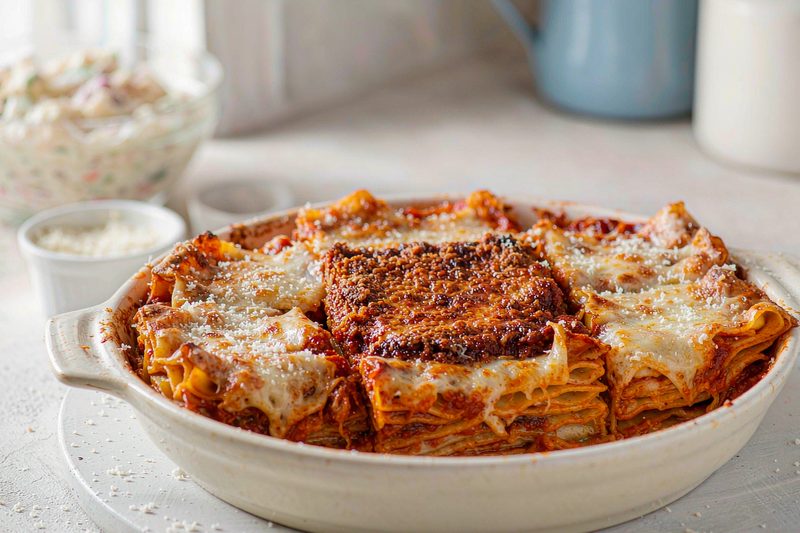
A lasagna cut straight from the oven collapses, because the cheese and starch have not yet set. Fifteen minutes of resting lets the layers firm up enough to hold a clean square. This is the least glamorous step and the one that most affects how the dish looks on the plate.
Ingredients
- 2 medium zucchini, sliced 1/4 inch thick
- 1 large eggplant, sliced 1/4 inch thick
- 2 bell peppers, cut into strips
- 4 tbsp olive oil, divided
- 1 1/2 tsp kosher salt, divided
- 2 24 oz jars marinara sauce
- 1 15 oz container part skim ricotta
- 1 large egg
- 12 no boil lasagna noodles
- 3 cups shredded part skim mozzarella
- 3/4 cup grated Parmesan
- 1/4 cup torn basil
Steps
Roast the vegetables in one layer
Heat the oven to 425 degrees F. Toss the zucchini, eggplant, and peppers with 3 tablespoons of oil and 1 teaspoon of salt. Spread across two sheet pans and roast 20 minutes until shrunken and browned at the edges.
Loosen the sauce
Pour the marinara into a bowl and whisk in 1/2 cup of water. It should look thinner than you would serve with pasta. The no boil noodles will absorb that extra liquid as they bake.
Mix the ricotta filling
Stir the ricotta with the egg, 1/2 cup of Parmesan, the remaining salt, and half the basil. Adding the egg gives the cheese layer body so it does not run when you cut the lasagna.
Build four layers
Spread a thin layer of sauce in a 9 by 13 dish, then add noodles, a third of the ricotta, a third of the vegetables, and a third of the mozzarella. Repeat three times, finishing with noodles, sauce, and mozzarella.
Bake covered, then uncovered
Cover with foil and bake 30 minutes at 375 degrees F. Remove the foil, add the remaining Parmesan, and bake 15 more minutes until the top is bubbling and browned in spots.
Rest 15 minutes before cutting
Let the dish sit on a rack for 15 minutes, then scatter the remaining basil and cut into squares. Cutting early will cost you every layer you built.
Making It Ahead Without a Mushy Result
- Assemble the whole dish a day ahead and keep it covered in the fridge, then add 10 minutes to the covered bake since it starts cold.
- Salt the eggplant and let it drain 20 minutes before roasting if it tastes bitter. Modern varieties usually do not need this.
- Freeze baked portions for up to two months. Thaw overnight in the fridge and reheat covered at 350 degrees F for 25 minutes.
When I made this
My first two attempts used no-boil noodles on the assumption they would be faster. Both turned into a watery layer that never set, because the raw vegetables were still leaking water straight into the cheese. Now I roast everything for half an hour first, which visibly shrinks the vegetables, and only then layer it up. The other mistake was too much liquid in the sauce. When I filled the pan to the top, the bottom quarter was broth. A little less than looks right is the amount you want.
Nutrition per serving
| Calories | 420 kcal |
| Protein | 24 g |
| Carbohydrates | 41 g |
| Fat | 18 g |
| Sodium | 780 mg |